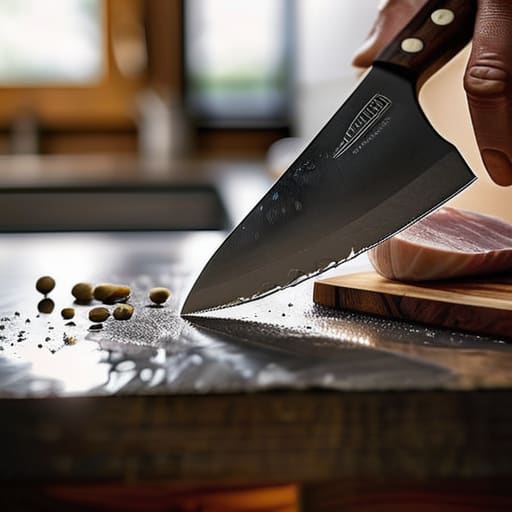
I spent twenty years in commercial kitchens where a dull blade wasn’t just an inconvenience—it was a safety hazard and a massive waste of prep time. I’ve seen countless home cooks throw away perfectly good high-carbon steel because they fell for the marketing trap of those cheap, electric pull-through gadgets. They promise a quick fix, but all they really do is chew up your edge and leave you with a blunt knife in six months. If you’re currently staring at a drawer full of plastic junk, wondering which of the many knife sharpener types is actually worth your hard-earned money, stop right there.
I’m not here to sell you on the latest shiny countertop appliance or some complicated gadget that requires a PhD to operate. My goal is to cut through the noise and show you the tools that actually stand the test of time. We are going to break down the real knife sharpener types—from whetstones to honing rods—based on how they actually perform in a working kitchen. I’ll give you the honest truth about what requires skill and what is simply a waste of counter space, so you can invest in gear that lasts a lifetime.
Electric Knife Sharpeners vs Manual Choosing Longevity Over Convenience
I see them in every junk drawer I encounter during my organizing sessions: those little plastic electric sharpening machines that promise a razor edge in seconds. Look, I get it. Life is busy, and the convenience is tempting. But here is the truth from someone who has spent decades in commercial kitchens: most of those electric units are too aggressive. They use coarse abrasive wheels that grind away far too much steel, effectively eating your investment just to save you five minutes of work. You aren’t just sharpening the blade; you’re thinning it out until there’s nothing left to work with.
If you actually care about professional chef knife maintenance, you need to move toward manual methods. Whether it’s a high-quality whetstone or a simple honing rod, manual tools allow you to control the pressure and feel the metal. When you’re comparing electric knife sharpeners vs manual options, remember that the manual route teaches you the skill of maintaining the edge yourself. You’ll learn to respect the specific angle of your steel rather than letting a motor do all the heavy lifting. It takes a bit more patience, but your knives will thank you for it ten years down the line.
Mastering Sharpening Stone Grit Levels for a Lifetime Edge
If you’re serious about professional chef knife maintenance, you need to stop looking at a whetstone as a single tool and start seeing it as a progression. Most beginners make the mistake of buying one stone and wondering why their blades still feel sluggish. The secret lies in understanding sharpening stone grit levels and knowing when to switch between them. You start with a coarse grit—think anything under 1,000—to actually reshape the metal and fix those nicks that happen when you’re rushing through prep work.
Once you’ve reset the edge, you move to the medium and fine grits to refine it. This is where you transition from “cutting” to “slicing.” A fine-grit stone (around 3,000 to 6,000) is what gives you that mirror-polish finish that glides through a tomato without a fight. I always tell my clients that consistency is more important than speed; if you don’t respect the grit progression, you’re just scratching up your steel without actually maintaining knife edge sharpness. Take the time to learn the rhythm, and your knives will outlast every gadget in your drawer.
My Non-Negotiables for Keeping Your Blades Sharp
- Skip the pull-through sharpeners. I’ve seen them in a thousand home kitchens, and they’re nothing more than expensive ways to chew up your expensive steel. They create jagged edges that won’t hold an edge for more than a week.
- Invest in a high-quality honing steel for daily maintenance. It isn’t for sharpening—it’s for realigning the edge between actual sharpening sessions. If you use it correctly, you’ll find yourself reaching for the stones much less often.
- Learn the difference between a honing rod and a sharpening stone. A rod keeps the edge straight; a stone actually removes metal to create a new edge. If you don’t know which one you’re holding, you’re going to have a bad time.
- Don’t go overboard with high-grit stones right away. If you’re starting from a dull, chipped blade, you need a coarse grit to do the heavy lifting. You can’t polish a scratch away if you haven’t fixed the structural problem first.
- Treat your sharpening tools with the same respect as your knives. A dirty whetstone or a cheap, bent honing rod will do more harm than good. Keep your gear clean, dry, and ready to work.
The Bottom Line on Keeping Your Blades Sharp
Stop looking for a quick fix in an electric grinder; if you want a knife that stays sharp for years instead of weeks, you need to embrace the learning curve of a manual stone.
Respect the grit—use your coarse stones to fix damage and your fine stones to polish the edge, because rushing the process only leads to a dull, useless blade.
A sharp knife is a safe knife, so stop hacking away at your prep work and start investing the ten minutes it takes to maintain your steel properly.
Final Thoughts on Keeping Your Edge
At the end of the day, choosing a sharpener isn’t about buying the most expensive gadget on the shelf; it’s about deciding how much you actually value your tools. If you want a quick fix, an electric sharpener might get the job done, but if you want to truly respect your steel, you need to embrace the manual route. Whether you opt for a high-quality pull-through or commit to the learning curve of a whetstone, the goal remains the same: precision and control. Don’t let a dull blade dictate how you cook or, worse, compromise your safety in the kitchen. Invest in a method that encourages you to slow down and master the technique rather than just rushing through the chore.
I’ve spent decades in professional kitchens, and I can tell you that the best chefs aren’t the ones with the flashiest equipment, but the ones who maintain what they have. A sharp knife is more than just a convenience; it is a fundamental part of a functional, disciplined kitchen. Once you stop treating sharpening as a nuisance and start seeing it as a essential ritual of maintenance, your entire cooking experience will change. Stop settling for subpar cuts and start treating your knives like the lifetime investments they are. Build better habits, buy better steel, and cook with confidence.
Frequently Asked Questions
I have a few expensive Japanese knives; will a standard pull-through sharpener ruin the edge?
Yes, it absolutely will. If you’ve invested in high-quality Japanese steel, a pull-through sharpener is your worst enemy. Those little carbide teeth are aggressive; they don’t “sharpen” so much as they gouge and chew through the metal. You’ll end up with a jagged, uneven edge that’s impossible to fix. Treat those knives with respect. Put the pull-through gadget in the trash and stick to a whetstone or a professional service.
How often do I actually need to sharpen my knives versus just honing them with a steel?
Look, there’s a massive difference between real sharpening and just straightening the edge. Think of honing with a steel as your daily maintenance—it realigns the microscopic teeth of the blade so it cuts predictably. You should do this every single time you cook. But honing isn’t fixing damage; it’s just delaying it. You need to actually hit the stone to remove metal and create a new edge every few months, depending on how hard you work your steel.
Is it worth the learning curve to use a whetstone, or am I better off with a high-quality manual tool?
Look, I’ll be blunt: if you want a sharp knife, the whetstone is the gold standard. Yes, there’s a learning curve, and yes, it takes patience you might not feel like you have on a Tuesday night. But a high-quality manual pull-through is just a band-aid; it scrapes away metal indiscriminately. If you’re serious about your tools, learn the stone. It’s an investment in your skill, not just your gear.
