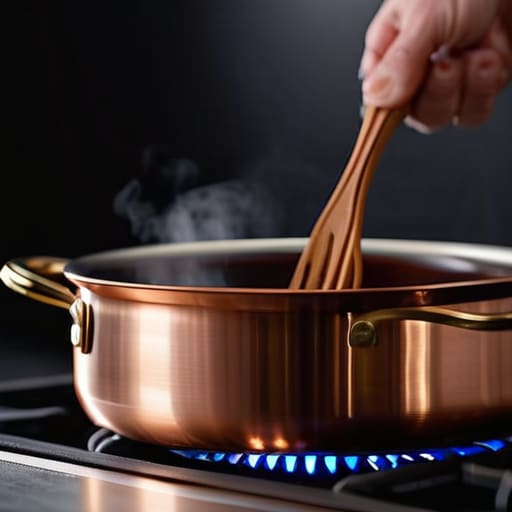
I spent twenty years in commercial kitchens where the heat is constant and there is zero room for gear that doesn’t perform. I’ve seen too many home cooks waste a fortune on those flashy, multi-piece “essential” sets, only to realize they’re struggling to reduce a simple béarnaise in a standard saucepan with steep, straight sides. If you’ve ever felt like you’re fighting your cookware just to get a smooth consistency, you don’t need a bigger budget; you just need a proper saucier pan. Stop trying to force a standard pot to do a specialist’s job—it’s a recipe for scorched milk and wasted ingredients.
I’m not here to sell you on some trendy, non-stick gadget that will peel in six months. My goal is to help you identify a saucier pan built with the weight and curvature that actually matters for heat distribution and whisking. I’ll tell you exactly what to look for in terms of material and construction so you can buy something once and use it for the rest of your life. No hype, no fluff—just the practical truth about what belongs in a working kitchen.
Saucier Pan vs Saucepan Why Shape Matters
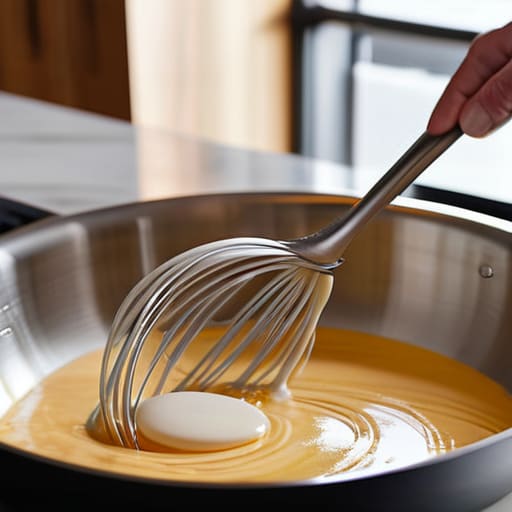
Most people grab whatever pot is closest to the stove, but if you’re trying to make a delicate reduction or a silky béchamel, a standard saucepan is going to fight you. The main difference in the saucier pan vs saucepan debate comes down to the geometry. A saucepan has straight, vertical sides, which is great for boiling water or making soup, but it’s terrible for whisking. When you’re working on small batch sauce preparation, those vertical walls create “dead zones” where ingredients get trapped and scorched.
A proper saucier features sloping, curved sides that allow your whisk to reach every single millimeter of the surface. This design isn’t just for show; it’s essential for even heat distribution for sauces and preventing those dreaded burnt bits at the edges. If you’re looking for the best pan for making gravy or a panade, you need that rounded bottom to keep everything moving. I always tell my clients: stop fighting your equipment. If the shape of the pan is working against your technique, you’re just making more work for yourself.
Professional Chef Cookware Built to Last a Lifetime
When I was managing high-volume catering lines, I saw too many cooks try to cut corners by using cheap, thin-walled pans that scorched every delicate reduction. If you want to do this right, you need to invest in professional chef cookware that doesn’t flinch when the heat goes up. I’m talking about heavy-gauge construction that provides the kind of even heat distribution for sauces that you just can’t get from a grocery store bargain bin.
You’ll often hear people debate stainless steel vs nonstick saucier options, and while nonstick has its place for eggs, it won’t survive a decade of heavy use. A high-quality tri-ply stainless steel vessel is my gold standard; it handles the heat, it’s easy to deglaze, and it won’t flake into your food. I’ve spent years restoring old gear, and the pans that actually survive the test of time are the ones built with substance. Don’t settle for a flimsy piece of metal that warps after six months. Buy the heavy stuff once, and you’ll never have to shop for this again.
Five Ways to Use Your Saucier Without Wasting Your Time
- Stop using it for boiling pasta. A saucier is designed for reduction and delicate emulsions, not for filling up with gallons of water. Save the deep stockpot for the heavy lifting and keep your saucier for the precision work.
- Watch your heat levels. Because the curved sides allow for better liquid circulation, you can reduce sauces much faster than in a standard saucepan, but that also means you can burn them if you aren’t paying attention.
- Use the curves to your advantage when whisking. One of the best things about the rounded bottom is that there are no “dead zones” in the corners where flour or cream can hide and scorch. It makes making a proper roux much easier on your wrists.
- Pair it with a heavy-duty whisk. If you’re using a professional-grade saucier, don’t use a flimsy, cheap whisk that’s going to bend the moment you hit a thick reduction. Match the tool to the pan.
- Don’t let it sit in the sink. If you bought a high-quality stainless steel or copper-core saucier, treat it with respect. A quick soak and a gentle scrub will keep that surface smooth for decades, preventing the tiny scratches that make sauces stick.
The Bottom Line on Choosing a Saucier
Stop trying to force a standard saucepan to do a specialist’s job; the curved bottom of a saucier is essential for whisking and preventing sauce from getting stuck in the corners.
Prioritize heavy-duty materials like stainless steel or copper over cheap non-stick coatings that will peel and end up in a landfill within two years.
Look for a pan with a wide surface area and high sides, which allows for better evaporation and more consistent heat distribution for your reductions.
Making the Right Investment
At the end of the day, choosing a saucier isn’t about adding another piece of metal to your cabinet; it’s about recognizing that your techniques deserve better tools. We’ve looked at why the sloped sides are non-negotiable for reducing sauces without splashing, and why you should prioritize heavy-duty stainless steel or copper over those flimsy, non-stick coatings that peel after six months. If you want to stop fighting your cookware and start focusing on the flavor, you need to stop settling for “good enough” pans that can’t handle the heat or the movement required for real cooking. A quality saucier is a workhorse, not a gadget, and it’s one of the few pieces of equipment that will actually make your life easier every single time you step up to the stove.
I know it can feel overwhelming when you see a million different brands and price points, but I promise you, the “trendy” option is rarely the right one. My advice is simple: buy once, buy well, and buy something that can be passed down. When you invest in a professional-grade saucier, you aren’t just buying a pan; you are investing in your own confidence in the kitchen. Once you master a reduction or a delicate custard in a tool that actually responds to you, you won’t ever want to go back to those shallow, awkward saucepans. Build a kitchen that lasts, one intentional piece at a time.
Frequently Asked Questions
Is a saucier pan really worth the extra counter space if I already own a standard saucepan?
Look, I get it. Counter space is precious, and I hate clutter as much as the next person. But if you’re tired of your sauces breaking or the liquid evaporating before your pasta is even al dente, the saucier is worth the footprint. A standard saucepan is a workhorse, but it can’t compete with those rounded edges for whisking or reducing. If you cook from scratch, it’s not a luxury—it’s a necessity.
Should I prioritize heavy-bottomed stainless steel or go with something non-stick for my sauces?
If you want a pan that lasts decades, go with heavy-bottomed stainless steel. It’s the industry standard for a reason: you can sear, deglaze, and reduce without worrying about ruining a coating. Non-stick is fine for a quick egg, but it’s a consumable—it’ll eventually flake and end up in the trash. Invest in stainless steel once, learn to manage your heat, and you’ll never have to buy another saucier again.
Can I use a saucier pan on an induction cooktop, or do I need to check the base specifically?
You definitely need to check the base. Induction works through magnetism, so if your saucier is pure copper or aluminum, it won’t even turn on. I always tell people to look for the “induction-ready” symbol on the bottom or test it with a simple magnet—if it sticks to the pan, you’re good to go. Don’t waste money on a beautiful piece of cookware if it can’t actually work on your stove.
