I spent two decades managing commercial kitchens where “eyeballing it” was a fast track to a ruined profit margin and a wasted batch of dough. I see people today spending hundreds on fancy, high-tech gadgets and designer mixing bowls, yet they still struggle with inconsistent results because they refuse to embrace the simplest tool in the drawer. They think a recipe is a suggestion, but if you aren’t weighing your ingredients, you’re just playing a guessing game. Understanding kitchen scale importance isn’t about being a perfectionist or a scientist; it’s about stopping the cycle of wasted food and expensive mistakes that happen every time you misjudge a “cup” of flour.
I’m not here to sell you on some trendy, over-engineered smart scale that connects to your phone. My goal is to give you the straight truth about why a basic, reliable scale is the only way to ensure your cooking actually works every single time you step up to the counter. I’ll show you how to cut through the clutter and use this one tool to master your recipes, save money, and finally get that consistent, professional result you’ve been chasing.
Table of Contents
- Achieving True Baking Consistency and Accuracy Every Single Time
- Mastering Culinary Precision Techniques for Better Results
- Five Ways a Scale Will Save Your Sanity (and Your Wallet)
- My Bottom Line on Kitchen Scales
- The Myth of the Measuring Cup
- Stop Guessing and Start Building a Better Kitchen
- Frequently Asked Questions
Achieving True Baking Consistency and Accuracy Every Single Time
If you’ve ever pulled a tray of cookies out of the oven only to find them flat, dry, or strangely gummy, you didn’t have a bad recipe—you had a measurement problem. The biggest culprit is the constant debate of gram vs cup measurement. When you scoop flour with a measuring cup, you’re essentially playing a guessing game; one person might pack that cup tightly, while another leaves it aerated and light. That tiny discrepancy is enough to ruin the chemistry of your dough. By switching to a scale, you’re embracing culinary precision techniques that professionals use to ensure every single loaf of bread or batch of muffins comes out exactly like the last one.
Beyond just the texture, using a scale is about mastering accurate ingredient portioning to save yourself from constant trial and error. I’ve seen too many people throw out entire batches of expensive batter because the ratios were off. When you weigh your ingredients, you aren’t just being “fancy”—you are reducing food waste with scales and ensuring your hard-earned money doesn’t end up in the trash.
Mastering Culinary Precision Techniques for Better Results
If you want to move beyond just following recipes and actually start understanding how they work, you need to embrace culinary precision techniques. In my years managing catering lines, I saw too many cooks ruin a batch of sauce or a delicate pastry because they were relying on “a pinch of this” or “a handful of that.” When you switch from volume to weight, you aren’t just being picky; you are eliminating the variables that cause failure.
The biggest hurdle for most home cooks is the mental shift from gram vs cup measurement. A cup of flour can vary by as much as twenty percent depending on how tightly you pack it into the vessel, but fifty grams is always fifty grams. By using a scale, you ensure accurate ingredient portioning every single time you step up to the counter. This isn’t about being a scientist; it’s about having the confidence that your dinner will taste exactly like it did the first time you made it. Stop treating your ingredients like suggestions and start treating them like the foundation of a good meal.
Five Ways a Scale Will Save Your Sanity (and Your Wallet)
- Stop wasting expensive ingredients on failed batches. If you’re measuring flour by the cup, you’re likely packing it down and adding way too much. Weighing your dry goods ensures you aren’t throwing money in the trash every time a cake turns out like a brick.
- Ditch the mountain of dirty measuring cups. Instead of grabbing five different vessels for oil, flour, sugar, and water, just put your bowl on the scale and tare it between each ingredient. It’s faster, more accurate, and makes the cleanup a breeze.
- Get serious about your portions. Whether you’re trying to manage your health or just trying to make sure everyone at the table gets a fair share of a high-end protein, a scale takes the guesswork out of serving sizes.
- Scale your recipes for crowds without the headache. When I was managing large-scale catering, we never “eyeballed” a recipe for 50 people. Using a scale allows you to multiply ingredients mathematically, ensuring the flavor profile stays exactly the same, regardless of the volume.
- Stop relying on “medium” or “large” eggs. If a recipe calls for a specific weight of egg, use the scale. It sounds nitpicky, but in professional kitchens, that tiny variance is the difference between a perfect custard and a runny mess.
My Bottom Line on Kitchen Scales
Stop wasting money on “measuring cups” for dry goods; a scale is faster, more accurate, and eliminates the mess of extra dishes.
Invest in a sturdy, digital scale with a high capacity—don’t buy a cheap plastic one that loses its calibration after three months.
Treat weight as your new standard for every recipe, because consistency in the kitchen comes from numbers, not guesswork.
The Myth of the Measuring Cup
“If you’re still measuring flour by the cup, you’re not cooking; you’re gambling. A cup of flour can weigh anywhere from 120 to 160 grams depending on how hard you pack it, and that’s a massive margin for error. Stop guessing and start weighing—consistency isn’t a luxury, it’s the foundation.”
Rosalind Hayter
Stop Guessing and Start Building a Better Kitchen
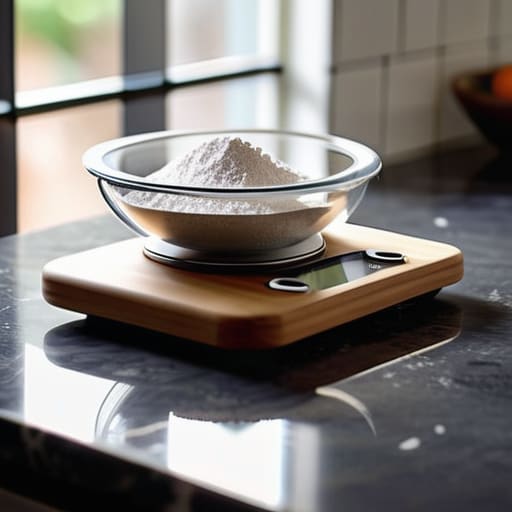
At the end of the day, a kitchen scale isn’t some high-tech luxury or a gadget meant to make your life more complicated; it is the foundation of a functional workspace. We’ve talked about how it eliminates the guesswork in baking, how it brings professional precision to your everyday cooking, and how it helps you manage your ingredients without the waste. If you are tired of following a recipe three times only to have it fail because your “cup” of flour was packed too tight, it is time to stop relying on volume and start trusting the numbers. Investing in a solid, reliable scale is one of the few decisions you’ll make in the kitchen that actually pays for itself through consistency and saved ingredients.
My advice is simple: don’t let the fear of “getting technical” keep you from mastering your craft. You don’t need a degree in chemistry to cook well, but you do need the right tools to support your habits. Once you make the switch from measuring cups to grams, you’ll realize how much control you actually have over the food you serve your family. Focus on the fundamentals, buy things that are built to last, and remember that true culinary confidence comes from knowing exactly what is in your pan. Now, put down the measuring spoons, grab a scale, and get to work.
Frequently Asked Questions
Do I really need a digital scale, or can I just use a set of old-fashioned measuring cups?
Look, I’ve seen plenty of people cling to those old measuring cups, but if you want to stop wasting ingredients, you need to make the switch. Cups are notoriously unreliable—one person packs their flour tight, another scoops it loosely, and suddenly your cake is a brick. A digital scale doesn’t care about how “fluffy” you think your flour is. It gives you the truth every single time. Invest in one; your sanity (and your recipes) will thank you.
Is it worth spending extra money on a professional-grade scale, or will a cheap one from a big-box store do the job?
Look, I’ve seen enough cheap, plastic scales end up in the landfill to know the answer. If you’re just weighing a bag of flour once a month, a big-box scale is fine. But if you actually cook, buy the professional-grade one. You want something with a steady readout, a solid platform, and a battery life that doesn’t die mid-recipe. Invest in the tool that won’t lie to you when precision matters.
How do I know if my scale is actually accurate, and how often should I be checking it?
Don’t just assume it’s working because the numbers are moving. Grab a heavy coin or a standard weight from a set and see if it hits the mark. If you don’t have those, a nickel is a decent hack—they weigh exactly five grams. Check your scale once a month, or whenever you notice a recipe acting up. If it’s off, it’s time to recalibrate or, frankly, toss it and buy something reliable.
