I’ve spent twenty years in commercial kitchens where “close enough” simply doesn’t cut it, and if there is one thing that drives me up the wall, it’s watching people waste money on high-tech, smart ovens that promise precision but fail to deliver. You can buy a machine that connects to your Wi-Fi, but if you aren’t using a reliable oven thermometer, you’re still just guessing what’s happening inside that metal box. I’ve seen countless beautiful roasts ruined and delicate pastries turned to charcoal, all because someone trusted the little dial on the stove instead of the actual temperature.
I’m not here to sell you on some fancy gadget or a digital upgrade you don’t need. My goal is to show you how a simple, analog tool can be the most important piece of equipment in your kitchen. I’m going to walk you through exactly what to look for in a quality thermometer and, more importantly, how to use it to master your heat. We’re going to cut through the marketing fluff and get back to the basics of consistent, predictable cooking.
Table of Contents
- Analog vs Digital Oven Thermometer Choosing Tools Built to Last
- Restoring Kitchen Appliance Accuracy Without Buying a New Stove
- 5 Rules for Making Your Thermometer Actually Work for You
- The Bottom Line on Oven Accuracy
- The Truth About Your Oven Dial
- The Bottom Line on Oven Accuracy
- Frequently Asked Questions
Analog vs Digital Oven Thermometer Choosing Tools Built to Last
## Analog vs Digital Oven Thermometer: Choosing Tools Built to Last
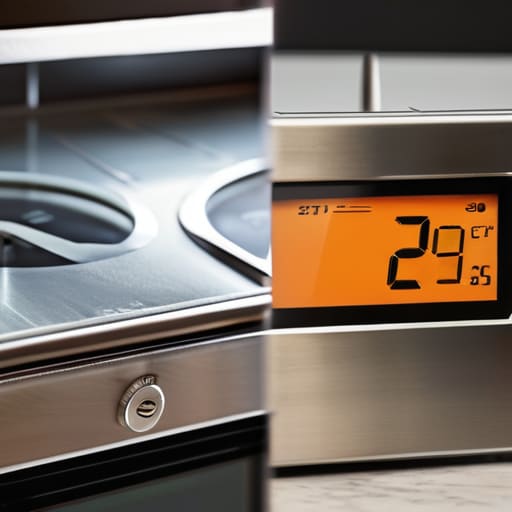
When you’re looking at the shelf, you’ll see two very different paths: the sleek, glowing digital displays and the old-school, mechanical dials. Most people gravitate toward digital because it feels modern, but in my experience, there’s a catch. Digital sensors can be finicky; they rely on batteries that eventually die and delicate electronics that don’t love the heat of a working kitchen. If you want a tool that survives a decade of heavy use, a high-quality analog version is usually the better bet for kitchen appliance accuracy.
That said, the debate of analog vs digital oven thermometer often comes down to how much you value immediate readout versus long-term durability. An analog dial is a simple piece of metal and glass—there are fewer moving parts to fail, and it’s much easier to keep in the oven permanently. If you’re serious about preventing burnt food or ensuring a delicate soufflé doesn’t collapse, you need a reading you can trust every single time you preheat. Stick to the mechanical ones; they’re built to work, not just to look pretty on a counter.
Restoring Kitchen Appliance Accuracy Without Buying a New Stove
Look, I’ve seen it a dozen times: someone gets frustrated because their sourdough comes out gummy or their roast is charred on the outside and raw in the middle, so they assume their expensive range is broken. Most of the time, the stove is fine; it’s just lying to you. Before you go out and drop thousands on a new appliance, you need to focus on calibrating oven temperature using the tools you already have. It’s about understanding that the dial on your stove is often just a suggestion, not a scientific fact.
The easiest way to fix this is to run a simple test. Set your oven to a standard temperature, let it stabilize, and then check it against a reliable thermometer. If there’s a discrepancy, you aren’t necessarily stuck. While some high-end ranges allow for digital adjustments, many older models require you to simply learn their “true” temperature. This kind of kitchen appliance accuracy isn’t about fancy tech; it’s about knowing exactly what is happening inside that metal box so you can stop wasting ingredients and start preventing burnt food before it even happens.
5 Rules for Making Your Thermometer Actually Work for You
- Stop relying on the knob. That dial on your stove is a suggestion, not a law. Always let your thermometer tell the real story before you slide a tray of roasted vegetables in.
- Give it time to settle. When you first pop the thermometer in, wait at least ten minutes. You need to see if the temperature is holding steady or if your oven is constantly cycling on and off like it’s panicking.
- Placement is everything. Don’t shove it right against the back wall or tucked under the heating element. Place it in the center of the rack where the heat is most consistent to get a true reading of your cooking zone.
- Don’t open the door to check. Every time you crack that oven door to peek at the thermometer, you lose a massive chunk of heat. Trust the tool, keep the door shut, and wait for the reading to stabilize.
- Check your thermometer against a real benchmark. Once a year, run an empty oven at a known temperature and verify it with a secondary source. If your “reliable” tool has drifted, it’s time to replace it—don’t just keep cooking with bad data.
The Bottom Line on Oven Accuracy
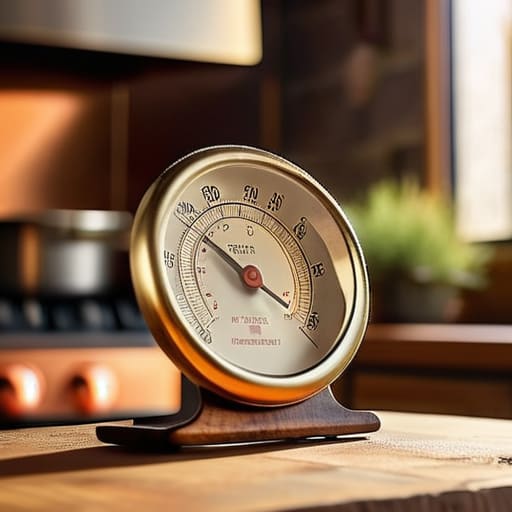
Stop trusting your stove’s built-in dial; it’s almost certainly lying to you, so buy a dedicated analog thermometer to get the real temperature.
Invest in quality over convenience—skip the cheap plastic digital gadgets that will fail in a year and go for a solid, metal-cased tool that lasts.
Accurate heat is the foundation of good cooking, so use your thermometer to fix your technique before you blame a “bad recipe” for a ruined meal.
The Truth About Your Oven Dial
Stop trusting that little dial on your stove like it’s gospel truth. I’ve seen too many expensive roasts ruined because someone assumed ‘350 degrees’ actually meant 350. A five-dollar analog thermometer isn’t a gadget; it’s the only way to stop guessing and start cooking with any real confidence.
Rosalind Hayter
The Bottom Line on Oven Accuracy
At the end of the day, an oven thermometer isn’t some luxury gadget; it’s a fundamental tool for anyone who actually wants to cook. We’ve looked at why an analog model is usually your best bet for longevity, why you shouldn’t feel the need to replace a perfectly good stove just because the temperature is off, and how a simple piece of metal can save you from a ruined Sunday roast. Whether you choose a classic brass dial or a digital probe, the goal remains the same: eliminating the guesswork so you can stop fighting your appliances and start focusing on your food. Don’t let a faulty heating element dictate the quality of your meals; take control of your kitchen with a tool that actually works.
I’ve spent enough years in commercial kitchens to know that the most expensive equipment in the world won’t save a cook who doesn’t respect their tools or their technique. A thermometer is a small investment, but it represents a bigger shift in how you approach cooking—moving from “hoping for the best” to cooking with intention. Stop settling for mediocre results caused by preventable errors. Once you start relying on accurate temperatures, you’ll find that your confidence grows alongside your skills. Build a kitchen that supports you, invest in the basics, and let the results speak for themselves.
Frequently Asked Questions
Where exactly should I place the thermometer in my oven to get the most accurate reading?
Don’t just toss it in a corner and hope for the best. You want that thermometer dead center on the middle rack. That’s your “sweet spot” where the heat is most consistent. If you’re baking something delicate like a soufflé or a cake, stay away from the walls or the very front of the oven—those spots are notorious for hot or cold pockets. Get it central, let the oven stabilize, and then trust the reading.
If my oven thermometer shows a different temperature than my oven's built-in display, which one should I actually trust?
Trust the thermometer. Every single time. Your oven’s built-in display is just a suggestion—it’s a digital readout based on what the machine thinks is happening, not what’s actually happening inside that metal box. I’ve seen countless cakes sink and roasts dry out because people relied on the dial. If the thermometer says you’re at 325°F and the display says 350°F, set your timer for 325°F. The thermometer doesn’t lie; the oven does.
How long do I need to let the oven preheat before I bother checking the thermometer?
Give it at least fifteen to twenty minutes. I’ve seen too many people peek too early, see a reading that’s slightly off, and immediately start second-guessing their entire setup. Your oven is a large thermal mass; it takes time for that heat to stabilize and for the thermometer to catch up. Let the air circulate, let the metal settle, and wait for a steady reading before you trust it. Patience prevents mistakes.
